
Writer: admin Time:2026-07-01 15:28 Browse:℃
How Large-Format 3D Printing Transforms Foundry Mould Production – Real Pump Housing Case
If you still rely on hand-carved wooden patterns for casting, it’s time to explore industrial 3D printing.
The huge pump housing mould in the picture is entirely manufactured by a large-scale industrial 3D printer. You can clearly see the layered printing texture covering its curved surface, integrated flanges, central boss and mounting base plate – all formed in one single print without splicing multiple wood pieces.
Ultra-Fast Lead TimeTraditional wooden pump patterns take 7–15 days of skilled carving, assembly and finishing. Our 3D printed equivalent only needs 1–3 days after CAD file confirmation. The printer runs unattended overnight, drastically shortening your order cycle for custom cast parts like pumps, valves and gearboxes.
Perfect Dimensional ConsistencyManual carving inevitably brings tolerance errors. 3D printing strictly follows digital CAD data, delivering uniform curves, accurate flange sizes and precise positioning holes. Every printed mould maintains identical dimensions, reducing casting scrap and improving finished metal part quality.
Zero Limits on Complex GeometryCompound arcs, undercut transitions and integrated structural features are hard and costly to carve on wood. With additive manufacturing, engineers adjust digital designs freely – no extra tooling or rework is needed for last-minute modifications.
Lower Long-Term Cost & Better DurabilitySkilled pattern woodworkers are expensive and hard to recruit. 3D printing only requires one technician to operate files and conduct simple post-processing. Printed composite materials resist moisture, warping and cracking far better than timber, supporting dozens of repeated sand casting cycles.
Why Orca Slicer Is The Go-To Slicing Software for Both Hobbyists & Industrial Large-Format 3D Printing
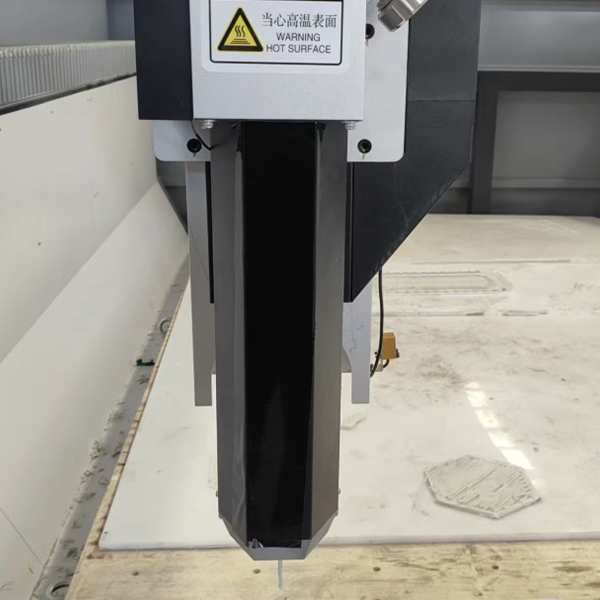
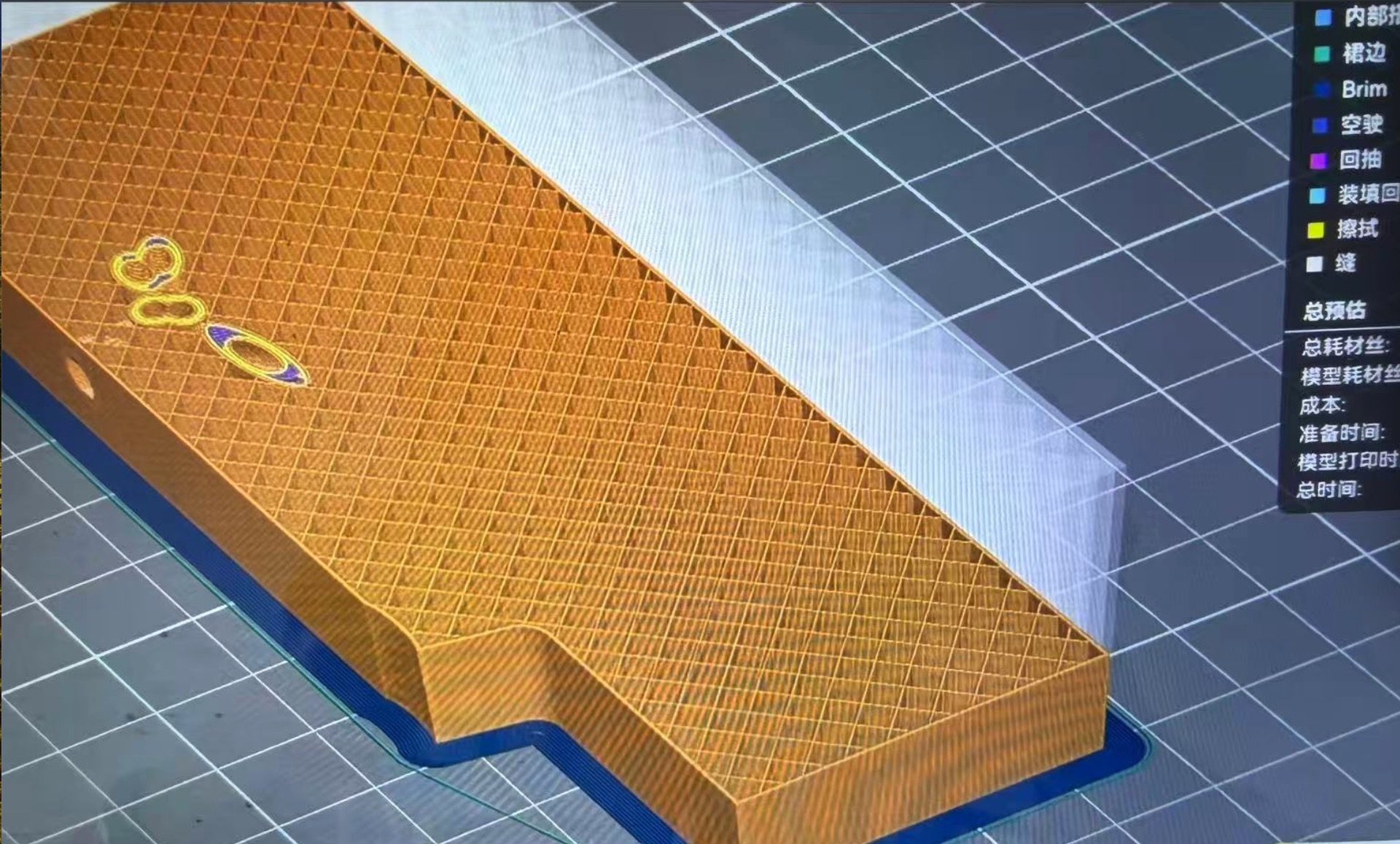
Orca Slicer is a free, open-source 3D printing slicer built as an enhanced fork of PrusaSlicer. It converts your digital CAD models (STL, STEP, 3MF files) into machine-readable G-code that tells your 3D printer nozzle where to move, how much filament to extrude, and layer by layer parameters.Unlike basic slicing tools, it balances easy-to-use hobbyist functions with advanced industrial-grade tools perfect for large-format foundry mould printing, custom mechanical parts and high-precision prototypes. The screenshot shows its core General preference panel, packed with flexible global settings for global users, multi-project workflows and printer management.
FGF Pellet 3D Printing: The Game-Changer for Industrial Casting Patterns & Large Moulds
FGF printers work with almost all mainstream engineering plastics: ABS, ASA, PETG, PLA, reinforced nylon, even high-performance PEEK.A standout feature is its flexibility to mix raw pellets: users can blend different colors, add fiber reinforcements, or even recycle failed prints and production scraps as new printing feedstock, creating fully customized composite materials tailored to industrial use cases.
Sustainability is a built-in benefit of FGF technology:All leftover plastic waste, defective prints and offcuts can be crushed, recycled and reused as printing raw material. This drastically cuts raw material expenses while reducing industrial waste, helping factories meet corporate sustainability and carbon neutrality targets.
Comparison Item | Traditional Wood Mould Manufacturing | FGF 3D Printing |
Core Principle | Subtractive manufacturing: Cut & carve solid wood blocks | Additive manufacturing: Build parts layer-by-layer from digital CAD models using plastic pellets |
Production Lead Time | Extremely long (days to weeks); relies on skilled woodworkers with complex manual procedures | Ultra-short (hours to days); fully automatic digital production, efficiency boosted by 10x |
Design Complexity Limits | Highly restricted; complex curved surfaces & hollow internal structures cost a fortune to produce | Full design freedom; easily fabricate complex curves, topology-optimized parts and integrated internal channels |
Material & Cost | Single material (timber only); high ongoing maintenance cost | Wide material range (ABS, ASA, engineering plastics); material cost 65%–90% lower than wood patterns |
Best Application Scenarios | Small batches requiring natural wood texture on finished surfaces | Large-size prototypes, custom tool jigs, low-volume functional parts, construction components, art sculptures & casting patterns |
Modification & Reusability | Very inconvenient: Any design change requires brand-new carving; old moulds cannot be reused | Simple updates: Edit the digital CAD file and reprint; design files stored permanently for repeated production |
Where Large-Scale FGF Pellet 3D Printing Is Used? Full Industry Application Guide
Large-format FGF pellet 3D printers break the size limit of ordinary filament 3D printing. With low-cost pellet raw materials, free complex design and fast automated production, they have replaced traditional wood mould carving across dozens of industries. Below are their most mature and high-value application scenarios.
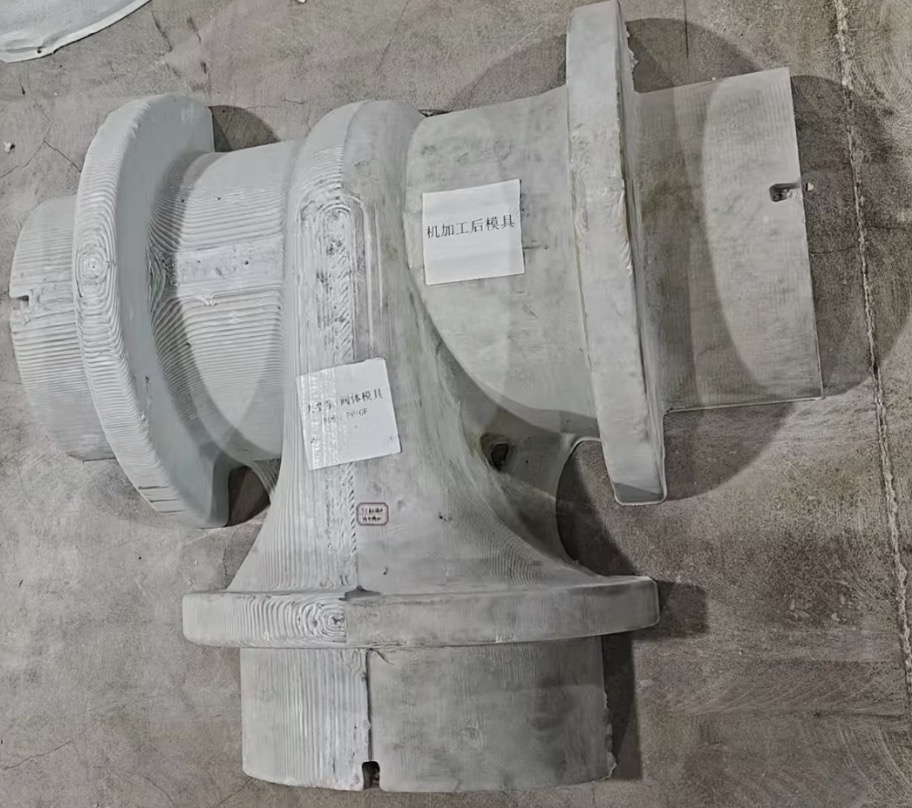
This is the most widely used field for our FGF printers, matching the pump housing mould case we showed before.
Produce full-size casting patterns for pumps, valves, gearboxes, hydraulic housings and heavy mechanical parts
One-piece printing for complex curved, flanged structures, no assembly splicing
Replace hand-carved wooden patterns: cut lead time from weeks to 1–3 days, reduce material cost by 65%~90%
Printed patterns resist moisture and deformation, can be reused for dozens of sand casting cycles
Custom fixture, positioning tool and inspection gauge for CNC machining, assembly lines
Lightweight reinforced plastic jigs with topology optimization, easy to transport and install
Quick iteration for small-batch customized equipment; modify CAD file directly without re-carving whole tools
Large precast concrete formwork, curved decorative building components
Architectural prototype models, landscape installation parts, villa custom decorative molds
Recyclable printing pellets cut waste, fit sustainable green construction standards
Prototypes for truck housings, new energy battery module fixtures, ship internal structural parts
Large curved outer shell prototypes for engineering vehicles, yachts and buses
Low-volume trial production parts without expensive injection molds
Oversized sculptures, art installation molds, museum exhibition props, event decorative models
Realize free organic curved shapes impossible for wood carving; fast full-size one-step forming
Multiple color composite pellets support direct color printing to cut post-processing work
Full-size functional prototypes of large household appliances, industrial equipment shells
Test structural strength, assembly fit and appearance before mass production
Auto backup digital files for secondary modification and reprinting at any time
Furniture & Mold Making: Custom curved furniture molds, foam replacement plastic decorative molds
Wind Power Parts: Small-batch auxiliary fixture and protective shell prototypes for wind turbine equipment
Educational Labs: Large engineering teaching models for university mechanical & material majors
From foundry casting patterns, mechanical tooling, construction formwork to art sculptures, large-format FGF pellet 3D printing provides a low-cost, fast, flexible manufacturing solution for all industries that need oversized customized parts.Compared with outdated wood carving and high-cost CNC machining, it shortens delivery time, lowers overall production expense and supports circular sustainable manufacturing, becoming the preferred production equipment for small-batch, large-size custom workpieces
Phone: +86 15910100309
Tel: +86 15966606596
Email: info@sunteccnc.com
Add: 13908 Factory licheng district jinan city
